

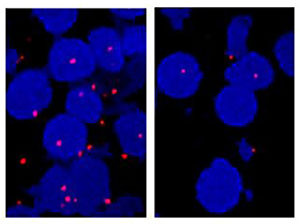
In a newly published study revealing the underlying efficacy of HIF-2 inhibitor drugs, investigators at UT Southwestern have discovered a potential Achilles heel for kidney cancer.
Clinical trial findings identified a cancer core dependency on HIF-2, a protein complex that plays a key role in the activation of genes responsible for cancer growth. In response to the drug’s ability to disable HIF-2, tumors developed a resistance in the form of a mutation in the protein binding pocket where the drug is delivered, thereby preventing access to it.
The finding suggests the critical role HIF-2 plays in the progression of kidney cancer and the extent to which tumors will safeguard it. PRESS RELEASE